
-
New
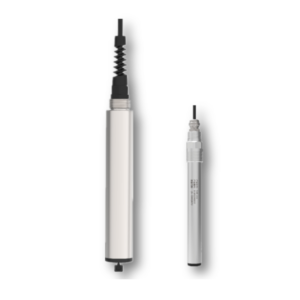
Infrared scattering light technology: when a light beam is directed at the sample solution, particles within the solution scatter the light. As shown in the diagram below, the angle between the emitted infrared light and the detection path is 90° (in accordance with ISO 7027). The intensity of the scattered light received by…
Turbidity Sensor
-
New
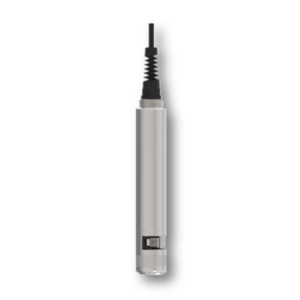
Traditional methods for measuring water transparency include the Secchi disk method, the lead character method, and the cross method. The latter two rely on visual observation after sampling and are unable to provide values when water transparency exceeds the length of the measuring tube. The Secchi disk, a 20 cm diameter disk…
Transparency Sensor
-
New
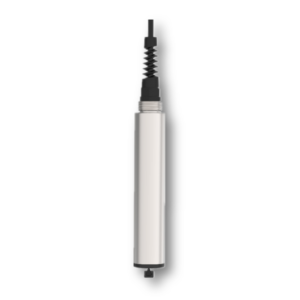
Infrared scattering light technology involves directing a light beam onto the sample solution, where sludge particles scatter the light. The infrared light source emits light, and the detection path is set at a specific angle to the incident light. The intensity of the scattered light received by the detector correlates with…
Sludge Concentration
-
New
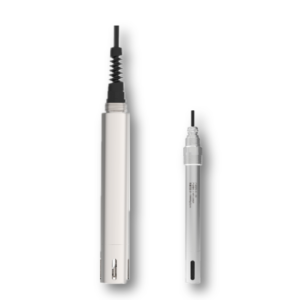
When measuring a sample, the salinity sensor first obtains an accurate conductivity value, which is then converted into salinity through an internal algorithm. Conductance or resistance is determined by measuring the current and voltage across the electrodes of the conductivity cell. Conductance (G) is defined as the reciprocal…
Salinity Sensor
-
New
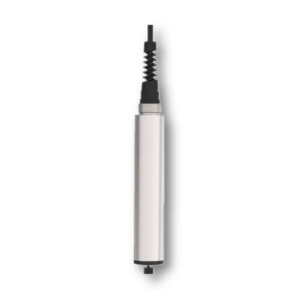
Infrared scattering light technology involves directing a light beam onto the sample solution, where suspended solids scatter the light. The infrared light source emits light at a specific angle relative to the detection path. The intensity of the light received by the detector correlates with the concentration of suspended…
S.S. Sensor
-
New
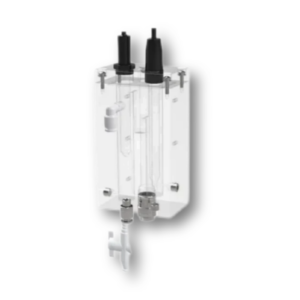
A constant potential is applied between the measuring and reference electrodes to form a micro-current measurement system consisting of two platinum electrodes (working and counter electrodes) and a reference electrode. Hypochlorous acid undergoes redox reactions on the surface of the working electrode, generating a current…
Residual Chlorine Electrode
-
New
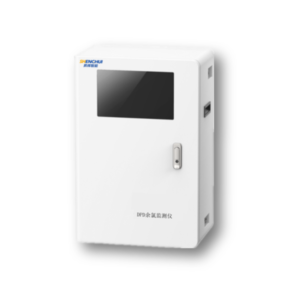
A pH buffer reagent is added to the water sample to adjust the pH to approximately 6.2–6.5. Free chlorine reacts directly with N,N-diethyl-1,4-phenylenediamine (DPD reagent) to form a red-colored compound. The absorbance of this compound is then measured at a wavelength of 510 nm to determine the free chlorine concentration.
Residual Chlorine by Chemical Method
-
New
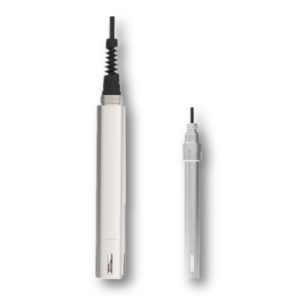
The redox sensor uses a platinum electrode as the indicator electrode, and an Ag/AgCl reference electrode forms a galvanic cell with the water sample. The redox potential of the platinum electrode relative to the saturated Ag/AgCl reference electrode is measured with an electronic millivoltmeter, then converted to the redox…
Redox Potential Sensor
-
New
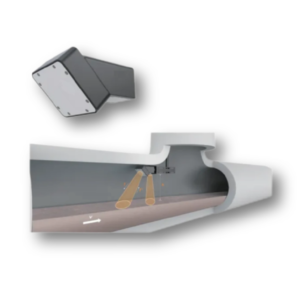
The flow velocity is measured using the reflection characteristics of radar signals. The instrument emits pulsed radio waves and receives signals reflected by particles within the fluid, such as bubbles and suspended solids. According to the Doppler effect, when particles move in the same direction as the fluid flow, the…
Radar Velocity Sensor
-
New
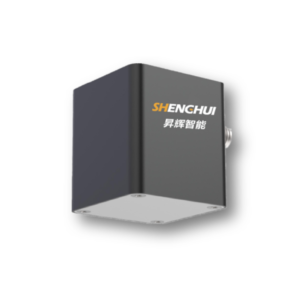
The radar water level sensor emits radar pulses through its antenna, which also receives the pulses reflected from the water surface and records the time. By measuring the time difference between the transmission and reception of the electromagnetic wave, the radar level meter calculates the distance to the water surface. The…
Radar Level Transmitter
-
New
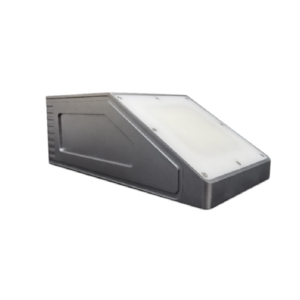
In acoustics, when there is relative motion between the sound source and the observer, the Doppler effect occurs. In this case, the frequency of the echo heard by the observer differs from the original source frequency; this change is called the Doppler frequency shift. Electromagnetic waves also exhibit the Doppler effect,…
Radar Flow Meter
-
New
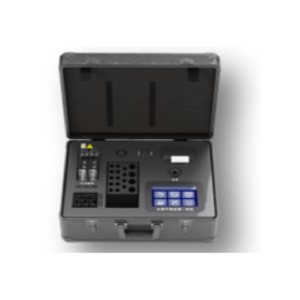
The Portable Water Quality Analyzer (for COD, Ammonia Nitrogen, Total Phosphorus, Total Nitrogen, etc.) adopts a high-brightness quasi-parallel LED cold light source and advanced German optical structure design. Based on the principle of characteristic absorption spectra of substances in the visible light range and the…
Portable Water Quality Analyzer
-
New
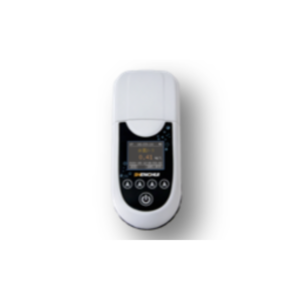
The portable turbidity meter combines the scattered light method and transmitted light method, utilizing a near-infrared light source to eliminate color interference. Equipped with 90° and 180° detectors, multiple lenses, and high-precision optical components such as filters, it ensures more accurate and stable measurements by…
Portable Turbidity Analyzer
-
New
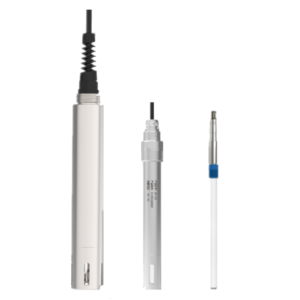
The sensor collects the potential difference between the reference electrode and the glass hydrogen ion indicator electrode, as well as the resistance value from the thermistor to obtain the water temperature. Based on the Nernst equation, the potential is then converted into a pH value.
ph sensor
-
New
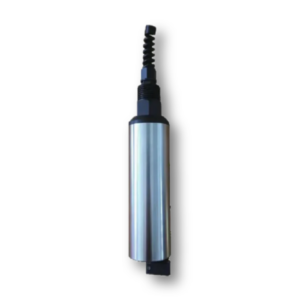
The sensor uses ultraviolet fluorescence to monitor oil content in water. It quantitatively analyzes the oil concentration based on the fluorescence intensity emitted after petroleum and its aromatic hydrocarbons, as well as compounds containing conjugated double bonds, absorb ultraviolet light. Aromatic hydrocarbons in…
Oil in Water Sensor
-
New
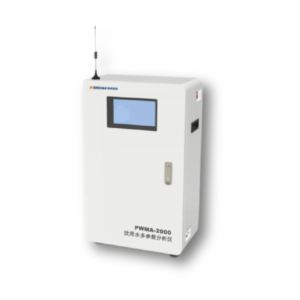
pH: The pH value is determined by collecting the potential difference between a reference electrode and a glass hydrogen ion-selective electrode, along with the thermistor value. The temperature is obtained from the thermistor, and the potential is converted to a pH value using the Nernst equation: E = E₀ − 2.303 × t ×…
Multi-Parameter Drinking Water Analyzer
-
New
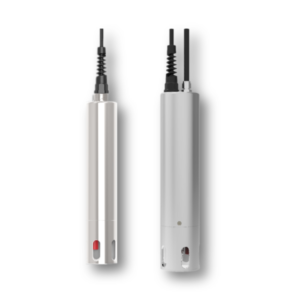
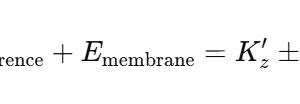
The measurement principle of ion-selective electrodes (ISEs) is based on the relationship between the activity and concentration of ions in an electrolyte solution. An ISE typically consists of two electrodes: a working electrode and a reference electrode. The working electrode selectively responds to the target ion, while the…
Ion-Selective Electrode
-
New
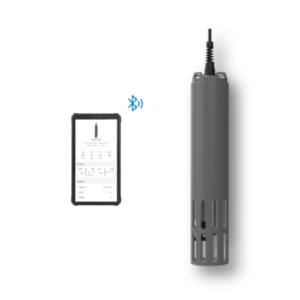
The integrated multi-parameter water quality analyzer is a monitoring instrument designed for hydrological and water quality data collection. Featuring a multi-in-one structural design, it can freely accommodate up to six sensors, including dissolved oxygen, pH, conductivity, turbidity, ORP, liquid level, chlorophyll, and…
Integrated Multi-Parameter Analyzer
-
New
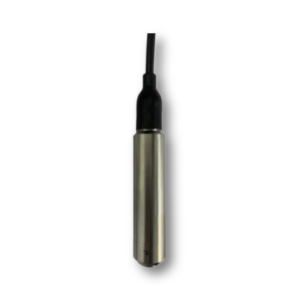
When the submersible level transmitter is immersed in a certain depth of the measured liquid, the sensor is subjected to the pressure from the liquid surface. This pressure is transmitted to the positive pressure chamber of the sensor through a gas-conducting stainless steel tube. At the same time, the atmospheric pressure P0…
Hydrostatic Level Transmitter
-
New
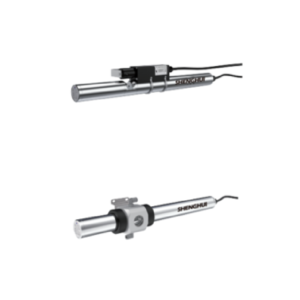
Different pollutants in water exhibit characteristic absorption features at various light wavelengths (water quality absorption spectral fingerprints), as illustrated below. The full-spectrum water quality analyzer interprets the absorption spectra of pollutants in the 190nm to 750nm wavelength range by mapping them with…
Full-Spectrum Water Quality Analyzer
-
New
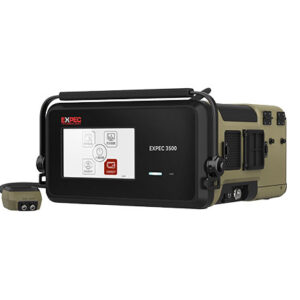
The new generation of EXPEC 3500 portable gas chromatography-mass spectrometry (GC-MS) is a portable device for rapid qualitative and quantitative analysis of onsite organic matter, which can be used for rapid qualitative and quantitative analysis of volatile organic compounds (VOCs) in the atmosphere, water and soil, as well…
EXPEC 3500 Portable Gas Chromatography Mass Spectrometry
-
New
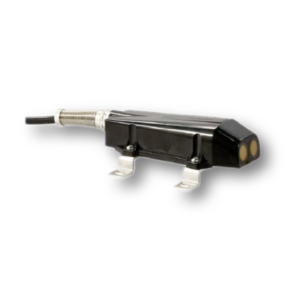
The transducers of the Acoustic Doppler Flow Meter emit acoustic waves into the water and receive echo signals with varying frequencies. Based on the frequency shift caused by the Doppler effect, the flow velocity is determined. By combining the measured velocity with the cross-sectional area of the pipe or channel, the flow…
Doppler Flow Meter
-
New
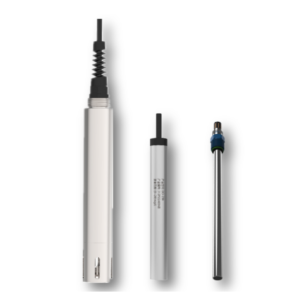
During the interaction between dissolved oxygen in water and fluorescent substances, both the fluorescence intensity decreases and the fluorescence lifetime shortens. This fluorescence quenching can be described by the Stern–Volmer equation: Where: I0I_0 — Fluorescence intensity in the absence of oxygen II — Fluorescence…
D. O. Sensor
-
New
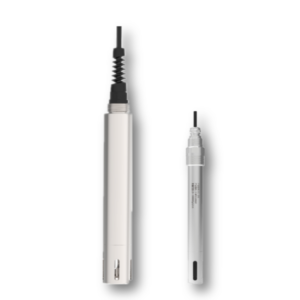
To measure the resistance or conductivity of a sample, the current and voltage across the electrodes of a conductivity cell must be measured. Conductance (G) is defined as the reciprocal of resistance: G = 1 / R = I / V The value of conductance depends on the geometry of the electrode plates and is represented by the cell…
Conductivity Sensor
-
New
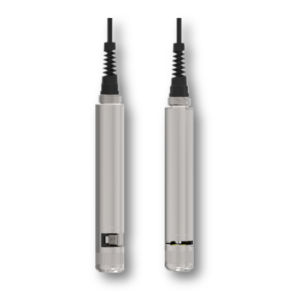
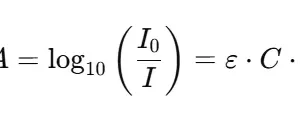
The ultraviolet (UV) absorption spectrum of water correlates well with the presence of organic pollutants. The concentration of organic pollutants absorbs UV light at specific wavelengths following the Lambert-Beer law, which can be expressed as: COD Sensor Where: A— Absorbance C — Concentration of the organic substance L —…
COD Sensor
-
New
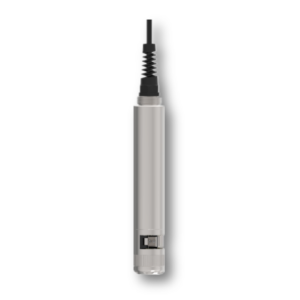
Uses dual light sources: one channel measures color using a system composed of a light source, photodiode, and quartz window to simulate human visual observation, with algorithms that establish a stable and reliable water color calculation model; the other channel measures water turbidity, applying specific algorithms to…
Chroma Sensor
-
New
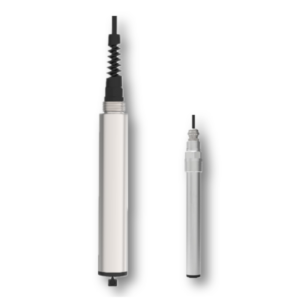
When a beam of light is directed into a liquid containing chlorophyll, the chlorophyll absorbs blue-violet and red light and emits fluorescence in the red wavelength range. The intensity of the fluorescence is directly proportional to the concentration of chlorophyll.
Chlorophyll-a Sensor
-
New
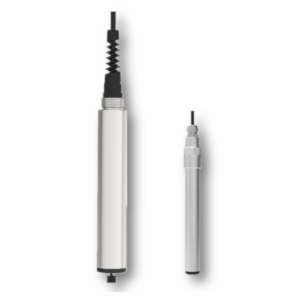
Blue-green algae are irradiated with excitation light of a specific wavelength, causing them to reach a higher energy state. When returning from this high-energy state to the ground state, they emit fluorescence at wavelengths longer than the excitation light. The intensity of this fluorescence is directly proportional to the…
Blue-green Algae Sensor

 No products in the cart.