




New
Compare
Report Abuse
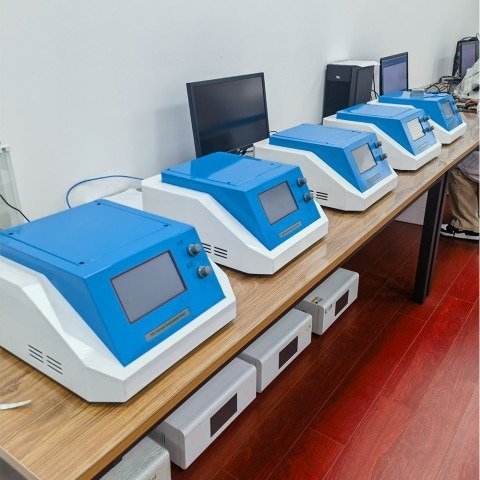
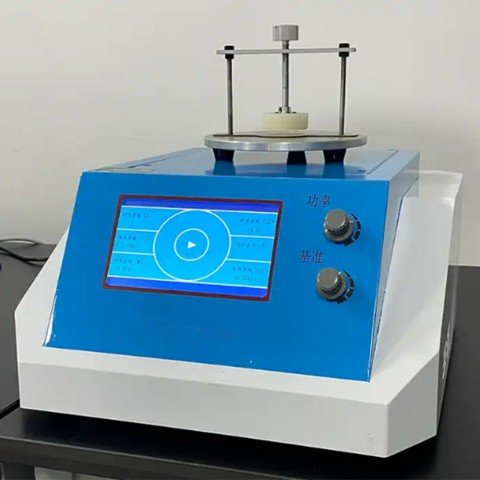
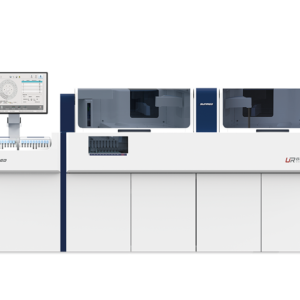
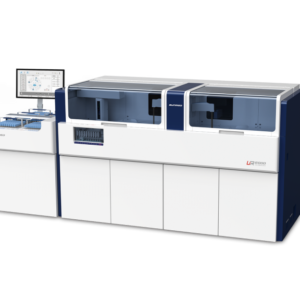
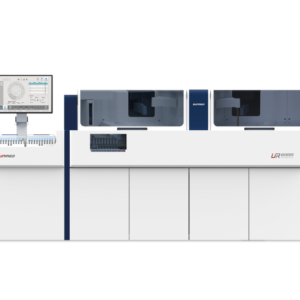
Drawell Transient Plane Heat Source Method Thermal Conductivity Meter BXT-DRS
Available in stock
The Drawell Transient Plane Heat Source Method Thermal Conductivity Meter BXT-DRS is a professional analytical laboratory instrument. Review features and technical specifications, then request configuration, MOQ, lead time, warranty, and a formal quotation.

Scientific China
Store


Additional information
| Product Category | Calorimeter and Thermal Analyzer |
|---|
Questions & Answers
Loading...
Product Enquiry
Product Enquiry
Description
Drawell Transient Plane Heat Source Method Thermal Conductivity Meter BXT-DRS
Product overview
The BXT-DRS rapid thermal conductivity tester is a thermal conductivity tester developed using transient planar heat source technology (TPS), which can be used to test the thermal conductivity of various materials. The transient plane heat source method is one of the medium-sized methods for studying the heat conduction performance, which brings the measurement technology to a whole new level. The ability to quickly and accurately measure thermal conductivity when researching materials provides great convenience for enterprise quality monitoring, material production, and laboratory research. The instrument is easy to operate, the method is simple and easy to understand, and it will not cause damage to the tested sample.
The Drawell Transient Plane Heat Source Method Thermal Conductivity Meter BXT-DRS supports research, pharmaceutical, environmental, food, industrial, and quality-control laboratories. Scientific China provides model selection, configuration review, export coordination, and formal quotations.
Key features
- Transient Planar Heat Source Technology (TPS) is a new method for measuring thermal conductivity, developed by Professor Silas Gustafsson of Chalmer University of Technology in Sweden on the basis of the hot wire method. The principle of measuring the thermophysical properties of materials is based on the transient temperature response generated by a step-heated disc-shaped heat source in an infinite medium. A flat probe is made of thermal resistance material, which serves as a heat source and temperature sensor…
- The thermal resistance coefficient of the alloy is a linear relationship between temperature and resistance, that is, the heat loss can be known by understanding the change of resistance, which reflects the thermal conductivity of the sample. The probe of this method is a continuous double helix structure sheet formed after etching treatment of a conductive alloy. The outer layer is a double-layer insulating protective layer with a very thin thickness. It makes the probe have a certain mechanical strength and…
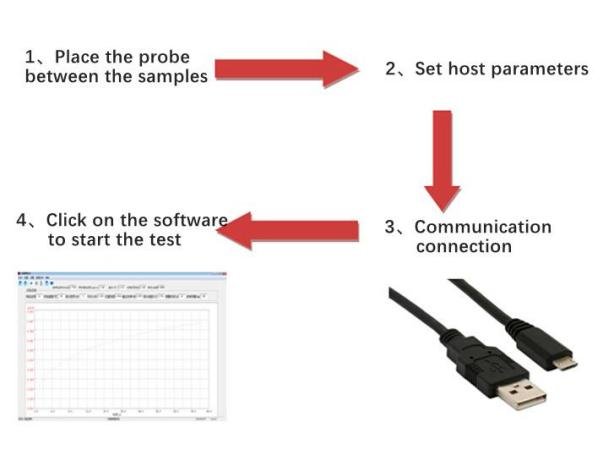
- During the test, the probe is placed in the middle of the sample for testing. When the current passes through the probe, a certain temperature rise is generated, and the generated heat is simultaneously diffused to the samples on both sides of the probe. The speed of thermal diffusion depends on the thermal conductivity of the material. By recording the temperature and the response time of the probe, the thermal conductivity can be directly obtained from the mathematical model.
- Fast and accurate: 5-160S can complete the test.
- Non-destructive testing: the sample is not damaged and can be reused.
- Simple sample preparation: no special requirements for sample size.
- A wide range of test objects: block solids, granular solids, liquids, powders, colloids, pastes can be tested.
- High flexibility: independent sample holder, detachable probe, flexible testing.
- User-friendly page, easy to operate: LCD touch screen display, easy to operate, easy tounderstand.
- Instrument reference standard: ISO 22007-2 2008
- The test range is wide and the test performance is stable, which is at a level among similar domestic instruments;
- Direct measurement, the test time can be set about 5-160s, which can quickly and accurately measure the thermal conductivity, saving a lot of time;
- It will not be affected by contact thermal resistance like the static method;
- No special sample preparation is required, and there are no special requirements for the shape of the sample. The bulk solid only needs a relatively smooth sample surface and the length and width are at least twice the diameter of the probe;
Applications
- Quantitative or qualitative laboratory analysis
- Research, method development, and routine quality control
- Application-specific testing with suitable accessories and methods
Technical specifications
| Test Range | 0.005-300W/(m*K) |
|---|---|
| Measuring temperature range | Room temperature— 130℃ |
| Probe diameter | No. 1 probe 7.5mm; No. 2 probe 15mm |
| Precision | ±3% |
| Repeatability error | ≤3% |
| Measure time | 5~160s |
| Power supply | AC 220V |
| Total power | ﹤ 500w |
| Sample temperature rise | ﹤ 15℃ |
| Test sample power P | No. 1 probe power 0<P<1w; No. 2 probe power 0<P<14w |
| Sample specifications | Single sample measured by probe No. 1 (15*15*3.75mm)A single sample measured by the No. 2 probe (30*30*7.5mm) |
| Note: The measurement of probe No. 1 is a low-conductivity material with a thinner thickness ≤0.2W/(m*K)). If the surface of the tested sample is smooth, flat and viscous, the samples canbe superimposed |
| Transientplanar heatsource method | Laser method | Hotline method | Protection plate method | |
| Measurement methods | Non-steady state method | Non-steady state method | Non-steady state method | Steady state method |
| Measure physical properties | Get thermalconductivityand thermaldiffusivitydirectly | Simple sample preparation with specific requirements | Get thermal conductivity directly | Get thermal conductivity directly |
| Scope of application | Solid, liquid, powder, paste, colloid, granule | Solid | Solid, liquid | Solid |
| Sample Preparation | No special requirements, simple sample preparation | Complex sample preparation | Simple sample preparation with specific rquirements | Large sample size |
| Measurement accuracy | ±3%,prefera bly ± 0.5% | Preferably up to ± 10% | Preferably up to ± 5% | Preferably up to ±3% |
| Physical model | Planar heat source contact measurement, as long as the limited surface contact is good | Non-contact heat source | Wire heat source, the wire model must be in good contact | Heat source contact type, need good surface contact |
| Thermal conductivity range[w/(m*k )] | 0.005-300 | 10-500 | 0.005-10 | 0.005-5 |
| Measure time | 5-160S | A few minutes | Tens of minutes | Hours |
Ordering and configuration
Final specifications, included accessories, consumables, software, certifications, power requirements, installation, warranty, and regulatory availability depend on the selected model and destination. Contact Scientific China to confirm the suitable configuration, minimum order quantity, price, lead time, documentation, and international delivery terms before purchase.
Reviews (0)
Only logged in customers who have purchased this product may leave a review.





 No products in the cart.
Reviews
There are no reviews yet.