








New
Compare
Report Abuse
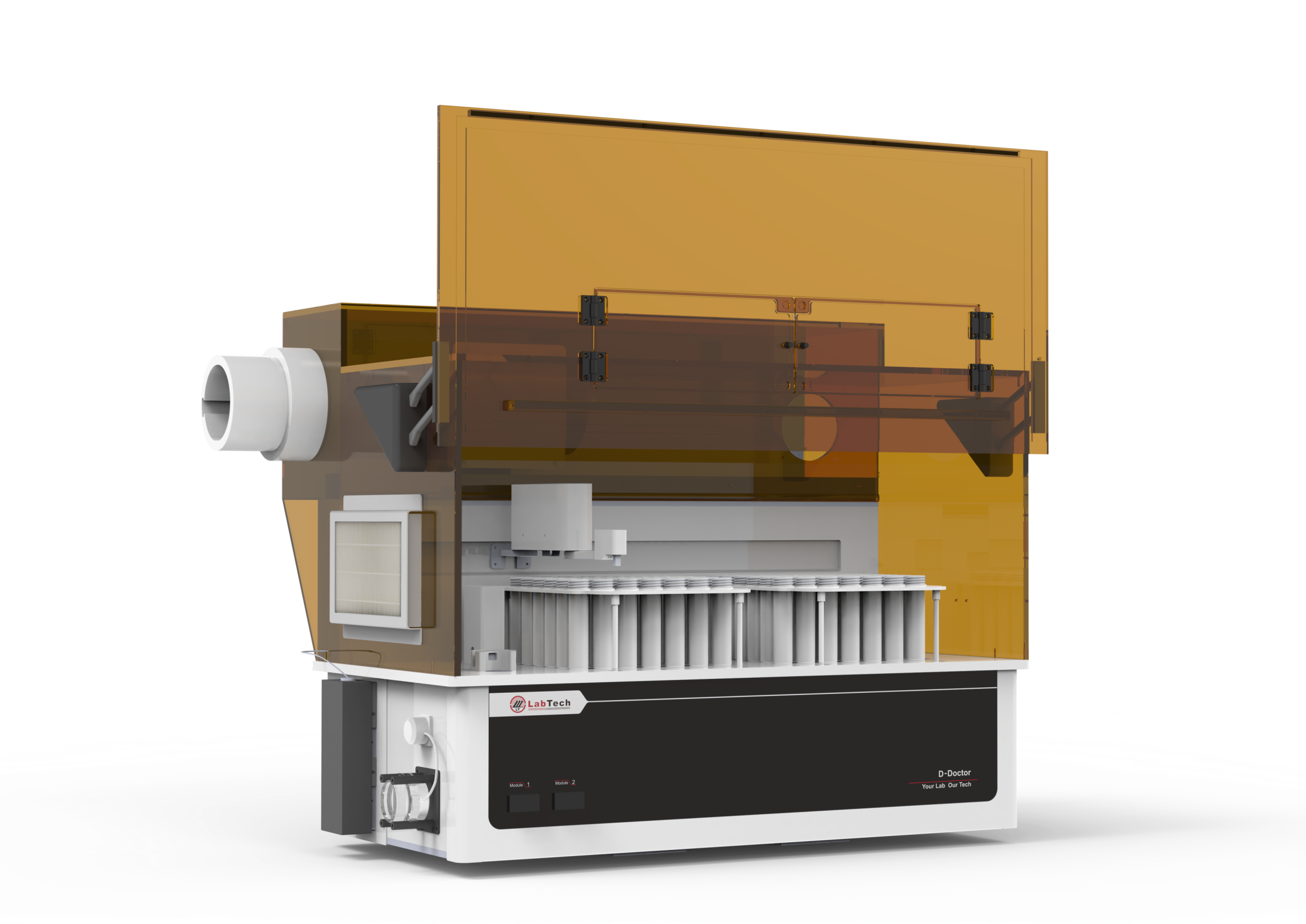
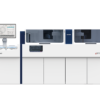
LabTech AutoDigiBlock
Available in stock
The fully automatic digestion system features a 360° rotating mechanical arm for more stable continuous operation and precise positioning. With an intelligent design, the instrument supports multi-terminal remote control, allowing users to safely operate the equipment even when away... Contact Scientific China for configuration, availability, MOQ and quotation.
Scientific China
Store

Additional information
| Product Category | Sample Prep. Instruments / Inorganic Sample Prep. / AutoDigiBlock Digester |
|---|
Questions & Answers
Loading...
Product Enquiry
Product Enquiry
Description
LabTech AutoDigiBlock
Product overview
The fully automatic digestion system features a 360° rotating mechanical arm for more stable continuous operation and precise positioning. With an intelligent design, the instrument supports multi-terminal remote control, allowing users to safely operate the equipment even when away from the lab. Additionally, it comes with standardized, programmed built-in digestion methods, making it a common choice for routine digestion of environmental, food, cosmetic, and other typical samples.
Key features
1. Intelligent Design for Anytime, Anywhere Operation
1.1 Wireless intelligent control allows users to operate the instrument without staying in front of the fume hood filled with acidic gases.
1.2 Multi-terminal access enables simultaneous control and monitoring via mobile phone, computer, and tablet—ideal for demonstrations and technical sharing across different locations.
1.3 Scheduled startup function allows pre-setting of methods so the instrument can run automatically at a designated time, achieving true unattended operation and freeing users’ hands.
1.4 Video monitoring system provides high-definition real-time surveillance of instrument status. In case of anomalies, the instrument can be stopped immediately and the method modified for safer unattended operation.
1.1 Wireless intelligent control allows users to operate the instrument without staying in front of the fume hood filled with acidic gases.
1.2 Multi-terminal access enables simultaneous control and monitoring via mobile phone, computer, and tablet—ideal for demonstrations and technical sharing across different locations.
1.3 Scheduled startup function allows pre-setting of methods so the instrument can run automatically at a designated time, achieving true unattended operation and freeing users’ hands.
1.4 Video monitoring system provides high-definition real-time surveillance of instrument status. In case of anomalies, the instrument can be stopped immediately and the method modified for safer unattended operation.
2. Fully Automated Sample Processing Simplifies the Workflow
2.1 The instrument automates reagent addition, sample mixing, lifting/lowering, gradient heating, acid evaporation, and final volume adjustment. During mid-process acid addition, automatic cooling prevents hazards, transforming complex steps into smooth automation.
2.2 Automatic generation of experimental reports upon method completion significantly boosts user efficiency.
3. Structural Design Prevents Acid Corrosion for Stable Operation
3.1 Features a 360° rotating mechanical arm and fully enclosed design to minimize corrosion from acidic gases and condensed acids, ensuring stable reagent delivery.
3.2 Multiple opto-electronic limiters ensure safer, more accurate shaking and lifting operations.
3.3 Equipped with a built-in ventilation system that doesn’t occupy fume hood space. Electrical components are isolated from the ventilation area to avoid high temperatures and acid corrosion, extending the instrument’s service life.
4. Safety Alert System Ensures Smooth Experiments
4.1 Voice alert system announces method completion, preventing overheating and sample drying due to oversight during remote control.
4.2 Real-time monitoring of reagent levels provides alerts when below preset thresholds; alarm is cleared after refilling.
Applications
Environmental
The DigiBlock Digestion System is ideal for the preparation of environmental samples — including soil, sludge, wastewater, and solid waste — for trace metal analysis. With its high throughput, uniform heating, and acid-resistant design, it supports laboratories complying with U.S. EPA regulations and analytical standards.
Typical Applications and Compatible Methods:
U.S. EPA Method 200.7 — Determination of Metals and Trace Elements in Water and Wastewater by ICP-OES
Ideal for digestion of drinking water, surface water, ground water, and industrial wastewater.
U.S. EPA Method 3050B — Acid Digestion of Sediments, Sludges, and Soils
Frequently used for preparing soil and solid waste samples for metals analysis using AAS or ICP.
U.S. EPA Method 3010A / 3020B — Acid Digestion of Aqueous Samples and Waste Extracts
Supports digestion of liquid environmental samples for metals analysis.
U.S. EPA Method 6010D — ICP-OES for Trace Elements in Environmental Samples
Often used in combination with acid digestion methods like 3050B and 3010A.
SW-846 Test Methods for Evaluating Solid Waste
The DigiBlock system supports digestion procedures recommended in the SW-846 compendium for hazardous waste testing.
Food & Beverage
The DigiBlock Digestion System provides a reliable and efficient solution for wet acid digestion of food samples prior to elemental analysis. It is widely used in food safety testing labs to prepare samples such as grains, dairy, meat, seafood, beverages, and food additives for heavy metal and trace element determination.
Typical Applications and Compatible Methods:
AOAC Official Method 999.10 — Lead, Cadmium, Copper, and Zinc in Foods by Graphite Furnace AAS
Used for heavy metal testing in a wide range of food matrices.
AOAC Official Method 2015.01 — Arsenic, Cadmium, Mercury, and Lead in Foods Using ICP-MS
Commonly applied in regulatory and compliance testing for toxic elements.
U.S. FDA Elemental Analysis Manual (EAM) 4.7 / 4.4 / 4.10 — Sample preparation and analysis of toxic elements in food and beverages
The DigiBlock supports sample prep steps including nitric acid digestion for ICP-MS or ICP-OES detection.
EPA Method 200.8 — Trace Elements in Water and Extracts by ICP-MS
Often used for testing drinking water, food extracts, and additive solutions.
USP <232> and <233> — Elemental Impurities – Limits and Procedures
Relevant for food supplements and nutraceutical products to comply with pharmaceutical-grade heavy metal standards.
Pharmaceutical
The DigiBlock Digestion System is designed for precise and efficient wet acid digestion of pharmaceutical samples to prepare them for elemental impurity testing and quality control. It supports stringent regulatory requirements, enabling accurate trace metal analysis in raw materials, intermediates, and finished drug products.
Typical Applications and Compatible Methods:
USP <232> and <233> — Elemental Impurities: Limits and Procedures
Preparation of samples for heavy metals testing by ICP-MS or ICP-OES to comply with FDA guidelines.
ICH Q3D Guideline — Elemental Impurities
Sample digestion protocols for risk assessment and control of elemental impurities in pharmaceuticals.
EPA Method 3051A — Microwave Assisted Acid Digestion of Sediments, Sludges, Soils, and Oils (adapted for pharma matrices)
Useful for complex matrices requiring complete digestion.
AOAC Methods for Active Pharmaceutical Ingredients (APIs) and excipients
Supports wet digestion preparation of APIs, excipients, and formulation components.
Semiconductor Analysis
The DigiBlock Digestion System is designed to support the demanding sample preparation requirements in the semiconductor industry, providing efficient and reliable wet acid digestion of materials for trace metal and elemental impurity analysis. It helps ensure product purity and compliance with industry standards.
Typical Applications and Compatible Methods:
SEMATECH and JEDEC Guidelines — Sample prep for trace metal analysis in semiconductor materials.
ASTM E2330 — Standard Guide for Elemental Impurities in Semiconductor Materials
IPC-1702 / IPC-1782 — Analytical methods for electronic and semiconductor materials
U.S. EPA Methods 6010D / 6020B — ICP-OES and ICP-MS analysis following acid digestion.
Disease Control
The DigiBlock Digestion System plays a vital role in sample preparation for public health laboratories, supporting the analysis of environmental and biological samples critical for disease surveillance, exposure assessment, and health risk evaluation.
Typical Applications and Compatible Methods:
CDC Laboratory Methods for Trace Metals in Biological Samples — Preparation of blood, urine, and tissue for toxic metal analysis.
NIH and EPA Protocols for Environmental Health Testing — Sample digestion for water, soil, and air particulate analysis in epidemiological studies.
EPA Method 3050B and 6010D — Acid digestion and ICP-OES for environmental contaminants relevant to public health.
WHO Guidelines on Heavy Metals and Toxic Elements Monitoring — Supports digestion protocols for global health initiatives.
Geology and Mining
The DigiBlock Digestion System is ideal for the wet acid digestion of geological and mineral samples, enabling accurate elemental and trace metal analysis essential for mining, exploration, and environmental assessment.
Typical Applications and Compatible Methods:
USGS Methods for Rock and Soil Digestion — Sample preparation for trace elements and heavy metals analysis.
EPA Method 3050B — Acid digestion of sediments and soils for metals analysis.
ASTM D6357 / D6720 — Standard Test Methods for elemental analysis in mineral samples.
ISO 14869 — Determination of heavy metals in soils and sediments.
Forensics
The DigiBlock Digestion System is widely used in forensic science and judicial laboratories for the precise preparation of various evidence samples through wet acid digestion. It facilitates accurate trace element and toxicology analyses crucial for criminal investigations, toxicology screening, and legal proceedings.
Typical Applications and Compatible Methods:
SWGDRUG and ASTM Forensic Standards — Sample preparation for heavy metals and trace elements in biological and environmental forensic samples.
NIJ (National Institute of Justice) Guidelines — Protocols for analysis of drugs, toxins, and trace evidence requiring digestion.
EPA Methods 3050B and 6010D — Acid digestion and elemental analysis for environmental forensics and crime scene samples.
AOAC Official Methods for Toxic Elements in Forensic Matrices — Preparation of biological fluids, tissues, and environmental samples.
Industrial Materials
The DigiBlock Digestion System is designed for efficient wet acid digestion of various material samples, enabling accurate elemental analysis critical for research, quality control, and product development in materials science.
Typical Applications and Compatible Methods:
ASTM E1613 / E1019 — Standard test methods for elemental analysis in metals and alloys.
ISO 16772 — Determination of trace elements in steel and iron materials.
EPA Method 3050B — Acid digestion for metals analysis in solid materials.
AOAC Methods for Polymers and Composites — Sample prep for elemental impurities testing.
Energy & Chemicals
The DigiBlock Digestion System provides efficient and reliable wet acid digestion of samples commonly encountered in energy production and chemical manufacturing. It supports accurate elemental and trace metal analysis essential for process control, product quality, and environmental compliance.
Typical Applications and Compatible Methods:
ASTM D7573 / D5762 — Sample preparation and elemental analysis in petroleum and petrochemical products.
U.S. EPA Method 3050B — Acid digestion of solid and liquid samples for metals analysis in chemical wastes and byproducts.
API (American Petroleum Institute) Recommended Practices — Sample prep for trace metals in crude oil and refined products.
ISO 15587 — Determination of metallic impurities in chemical substances.
Environmental
Food & Beverage
Pharmaceutical
Semiconductor Analysis
Disease Control
Geology and Mining
Forensics
Industrial Materials
Energy & Chemicals
Technical specifications
| Brand | LabTech |
|---|---|
| Product name | LabTech AutoDigiBlock |
| Product category | Sample Prep. Instruments / Inorganic Sample Prep. / AutoDigiBlock Digester |
| Configuration | Model, capacity, dimensions, power supply, compatible accessories and other specifications must be confirmed for the selected configuration. |
Product video
Watch the LabTech AutoDigiBlock product video
Ordering and configuration
Contact Scientific China to confirm the exact model, configuration, accessories, consumables, electrical requirements, minimum order quantity, lead time, shipping terms, warranty and formal quotation.
Reviews (0)
Only logged in customers who have purchased this product may leave a review.





 No products in the cart.
Reviews
There are no reviews yet.